
A civics curriculum is like any other subject taught in school:
It requires skilled instruction, careful practice, and opportunities to experiment. Constitutional Democracy Project’s lessons and curricula provide authentic civic learning and enable schools to serve as “laboratories” for democratic participation.
Keywords to search by:

Free Lessons
-
 This activity on Responsibility helps students learn about responsible behavior and how it applies to their own lives.
 -
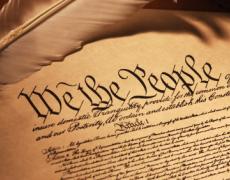 The Preamble to the U.S. Constitution sets out the purposes or functions of American government as envisioned by the framers.
 -
 This activity on Participation helps students identify and illustrate characteristics of a good citizen.
 -
 In this four lesson unit, students read selected background material on the Sheppard murder case and discuss the assigned readings in class.
 -
 In this structured discussion method, under the guidance of a facilitator, participants are encouraged to engage intellectually with challenging materials, gain insight about their own point of view and strive for a shared understanding of issues.
 -
 Death is an unavoidable part of life—people have no choice about whether they will die. But debate rages about how much control people—especially terminally ill patients suffering considerable pain—should have over the time and manner in which they die.
 -
 According to Article II, Section 2 of the Constitution of the United States, “[The President] shall nominate, and by and with the Advice and Consent of the Senate, shall appoint… Judges of the supreme Court….”
 -
 In 1947, in Clarendon County, South Carolina, a small group of African American parents sued their local (white) school board alleging a violation of their rights under the Equal Protection Clause of the Fourteenth Amendment.
 -
 Primary VOICE program is a collection of lessons and tools that help second- and third-grade teachers connect civic learning with the essential skills of reading, writing, and speaking and is funded by the Polk Bros. Foundation.