
A civics curriculum is like any other subject taught in school:
It requires skilled instruction, careful practice, and opportunities to experiment. Constitutional Democracy Project’s lessons and curricula provide authentic civic learning and enable schools to serve as “laboratories” for democratic participation.
Keywords to search by:

Middle School
-
 In this structured discussion method, under the guidance of a facilitator, participants are encouraged to engage intellectually with challenging materials, gain insight about their own point of view and strive for a shared understanding of issues.
 -
 According to Article II, Section 2 of the Constitution of the United States, “[The President] shall nominate, and by and with the Advice and Consent of the Senate, shall appoint… Judges of the supreme Court….”
 -
 “No unreasonable search and seizure, free speech, no cruel and unusual punishment.” These phrases from the Bill of Rights are often seen by students as just more information to memorize.
 -
 Civil Conversation on the 14th Amendment The Fourteenth Amendment fundamentally redefined the central institutions of American civic and political life after the Civil War and remains the bulwark of our Constitutional rights today.
 -
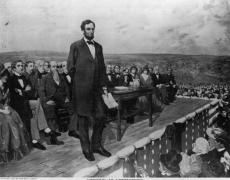 On November 19, 1863, President Abraham Lincoln dedicated the https://www.nps.gov/gett/index.htmcemetery at Gettysburg, Pennsylvania, where Union and Confederate armies had fought July 1-3 in the decisi
 -
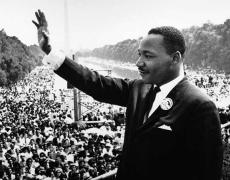 Understanding the Preamble to the U.S. Constitution is important because it sets out the purposes or functions of government as envisioned by the framers.
 -
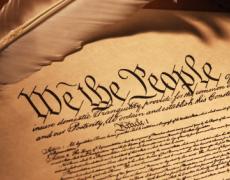 The Preamble to the U.S. Constitution sets out the purposes or functions of American government as envisioned by the framers.
 -
 This lesson helps students understand some of the important protections given to people accused of a crime and engages them in defining a critical term in the work of juries: beyond a reasonable doubt.
 -
 This introductory activity asks participants to think about and discuss the qualities of an effective citizen in four areas: knowledge, skills, attitudes, and action.