
A civics curriculum is like any other subject taught in school:
It requires skilled instruction, careful practice, and opportunities to experiment. Constitutional Democracy Project’s lessons and curricula provide authentic civic learning and enable schools to serve as “laboratories” for democratic participation.
Keywords to search by:

Free Lessons
-
 “No unreasonable search and seizure, free speech, no cruel and unusual punishment.” These phrases from the Bill of Rights are often seen by students as just more information to memorize.
 -
 In this lesson, students will consider whether Illinois should pass a law requiring all law enforcement officials in the state to wear body cameras.
 -
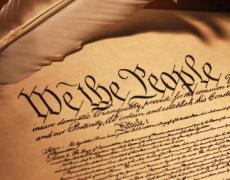 Civil Conversation on the 14th Amendment The Fourteenth Amendment fundamentally redefined the central institutions of American civic and political life after the Civil War and remains the bulwark of our Constitutional rights today.
 -
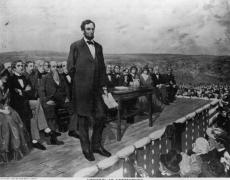 On November 19, 1863, President Abraham Lincoln dedicated the cemetery at Gettysburg, Pennsylvania, where Union and Confederate armies had fought July 1-3 in the decisive battle of the Civil War.
 -
 CRFC’s Primary VOICE program is a collection of lessons and tools that help second- and third-grade teachers connect civic learning with the essential skills of reading, writing, and speaking and is funded by the Polk Bros.Foundation.
 -
 The U.S. Supreme Court has held that students do not “shed their constitutional rights to freedom of speech or expression at the schoolhouse gate” (Tinker v. Des Moines ISD, 1969).
 -
 The U.S. Supreme Court has held that students do not “shed their constitutional rights to freedom of speech or expression at the schoolhouse gate” (Tinker v. Des Moines ISD, 1969).
 -
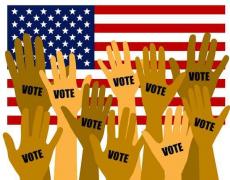 Voting is one of the most basic ways to participate in a democratic society.
 -
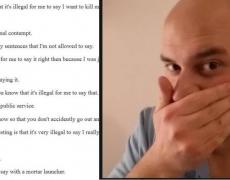 The Supreme Court of the United States has interpreted the First Amendment to contain several categorical exceptions to the Free Speech Clause.